
Mycotoxins and Climate Change: Why Mold Is Becoming a Bigger Problem in Our Homes and Food Supply
Introduction
As global temperatures rise and climate patterns continue to shift, scientists are sounding the alarm on an often-overlooked consequence: our growing exposure to mycotoxins. These toxic compounds, produced by certain species of mold, thrive in warm, humid conditions, precisely the environment that climate change is making more common across the globe. Whether present in our food supply or spreading silently through our homes, mycotoxins pose a serious threat that should not be ignored. As mold-related illness becomes more prevalent across the country, they are now gaining long-overdue recognition as a widespread public health concern.
What Are Mycotoxins and What Do They Do to the Body?
Mycotoxins are naturally occurring chemical compounds produced by certain molds as a byproduct of their growth. While not all molds produce them, certain species including Aspergillus, Fusarium, and Stachybotrys can release these compounds into the air, soil, and food we consume.
Once mycotoxins enter the body, through inhalation, ingestion, or skin contact, they can disrupt multiple biological systems. Respiratory effects are among the most reported, including chronic coughing, wheezing, and the aggravation of asthma or pre-existing lung conditions. Prolonged exposure has also been associated with neurological symptoms such as brain fog, memory difficulties, and mood disturbances. Beyond this, certain mycotoxins are known to suppress immune function, leaving the body more vulnerable to secondary infections. Some types, such as Aflatoxin B1, produced by Aspergillus molds, are classified by the World Health Organization as potent human carcinogens. Chronic fatigue is another frequently reported symptom among individuals with sustained exposure. In short, these compounds carry serious health implications that extend well beyond a stuffy nose.
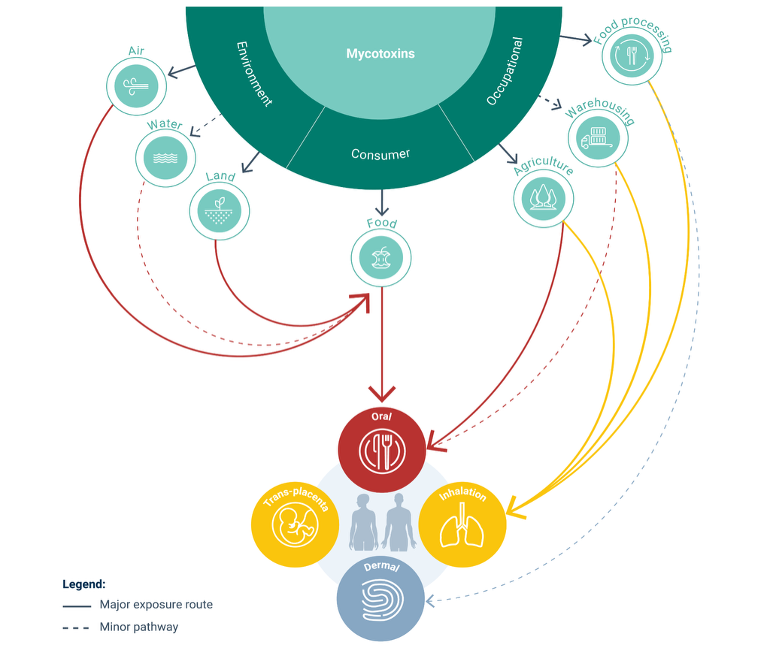
At RealTime Labs, mycotoxin testing is a core part of what we do, and understanding the environmental forces driving increased exposure is essential to understanding why accurate, timely testing matters more than ever.
Mycotoxins in the Home: The Role of Water Damage and Storms
Climate change doesn’t only affect the outdoors. Increased storm intensity, particularly from hurricanes and flooding, brings significant water damage to homes and buildings, creating ideal conditions for indoor mold growth. In 2024 alone, NOAA reported $27 billion in hurricane-related damages, the highest figure on record. Fueled by record-high ocean surface temperatures, that hurricane season left widespread destruction in its wake, and concealed within the water damage was the invisible threat of mycotoxins.
Mold can establish itself rapidly in damp, humid environments. States like Florida, Louisiana, and Texas are especially vulnerable, but no region is entirely safe. When mold colonies take hold indoors, a range of mycotoxins can be released into the air that residents breathe daily. Even without a major storm event, rising ambient humidity in certain regions is sufficient to promote hidden mold growth inside walls, attics, and HVAC systems, areas that often go unnoticed until a health problem surfaces. For homeowners concerned about indoor air quality, professional mold and mycotoxin testing is a critical first step in identifying and addressing these hidden risks.
The Effect of Climate Change on Mycotoxins in Crops
The threat does not stop at our front doors. Fungi that produce mycotoxins, such as Aspergillus, are expanding into new geographical regions as global temperatures climb, colonizing areas where they previously could not survive. Climate models indicate that even a modest 2°C increase in average global temperatures could substantially expand the suitable habitat for mycotoxin-producing fungi, putting staple crops like maize, wheat, and peanuts at heightened risk of contamination.
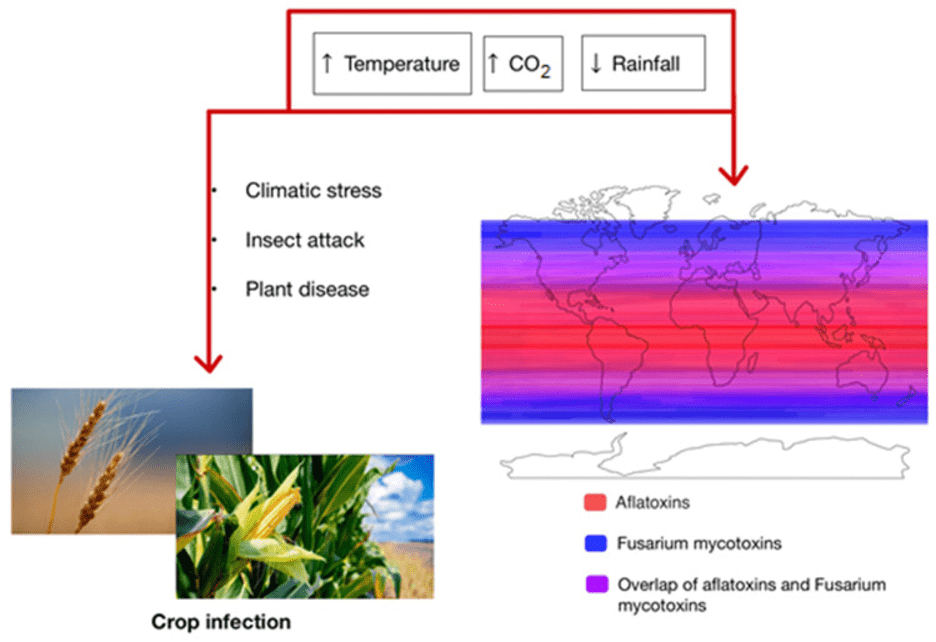
The consequences are both a public health concern and an economic one. Contaminated crops may be unsafe for human or animal consumption, leading to reduced yields, widespread food waste, and significant financial losses across agricultural supply chains. It is worth noting, however, that the relationship between warming and fungal proliferation is not strictly linear. Under extreme warming scenarios, such as a 5°C increase, some regions may become too hot for certain fungi to survive, shifting the risk zones once again. But reaching such a threshold would carry far more catastrophic consequences across virtually every dimension of human and environmental health. For food producers and safety regulators alike, mycotoxin monitoring in crops must be treated as an evolving, climate-sensitive challenge.
Why This Matters Now
Climate models consistently project that mycotoxins will become more widespread and increasingly difficult to control under moderate warming scenarios. Our food supply and our homes, the two most fundamental pillars of daily life, are both growing more vulnerable. Staying informed about mycotoxin exposure risks is no longer a concern reserved for scientists and agricultural specialists; it is a practical matter for all of us, particularly as rising temperatures, prolonged droughts, and more intense storms become the new baseline.
As exposure risks grow, so does the importance of reliable testing. RealTime Labs provides comprehensive mycotoxin testing panels designed to detect a broad spectrum of mycotoxins in both environmental and biological samples, equipping individuals, clinicians, and researchers with the data they need to make informed decisions about health and safety.
What Can Be Done?
While the scope of this issue can feel overwhelming, there are meaningful steps that individuals, communities, and policymakers can take to reduce risk.
On the food safety front, supporting stronger testing standards and updated regulations in regions newly at risk can help intercept contaminated crops before they reach consumers. Awareness of how food is sourced and stored also plays a role, as mycotoxins can continue to develop in improperly stored grains, nuts, and dried goods even well after harvest.
When it comes to our homes, public education around mold prevention and post-storm remediation is essential. Promptly addressing water intrusion, maintaining adequate ventilation, and having homes professionally inspected for hidden mold, especially after flooding events, are all practical protective measures. If mold is discovered, professional remediation is strongly recommended over DIY removal, as disturbing mold colonies without proper precautions can significantly increase airborne mycotoxin exposure.
For individuals who suspect ongoing mycotoxin exposure, whether through diet or the indoor environment, targeted mycotoxin urine testing can provide actionable insight into the body’s toxic burden and help guide appropriate clinical intervention.
Conclusion
Mycotoxins may not dominate the conversation when we discuss the consequences of climate change, but they represent a growing and very tangible health risk, one that simultaneously threatens our food supply and the spaces where we live. As global temperatures continue to rise and storm intensity increases, this invisible threat deserves far greater public attention, proactive policy, and informed individual action.
The good news is that awareness is a powerful first step, and reliable testing is the bridge between awareness and action.
Learn More with RealTime Labs
RealTime Labs specializes in accurate, science-backed mycotoxin testing for both patients and healthcare providers. Whether you’re concerned about mold exposure in your home, potential contamination in your diet, or unexplained chronic symptoms, our testing panels are designed to give you clear, clinically meaningful results.
Visit www.realtimelab.com to explore our mycotoxin test options, learn about our methodology, and take a proactive step toward understanding your environmental health.
References
Gasperini AM, Rodriguez-Sixtos A, Verheecke-Vaessen C, et al. Resilience of Biocontrol for Aflatoxin Minimization Strategies: Climate Change Abiotic Factors May Affect Control in Non-GM and GM-Maize Cultivars. Front Microbiol. 2019;10:2525. doi:10.3389/fmicb.2019.02525
European Environment Agency. (2024). Mycotoxin exposure in a changing European climate. https://www.eea.europa.eu/en/analysis/publications/mycotoxin-exposure-in-a-changing-european-climate
Battilani P, Toscano P, Van der Fels-Klerx H, et al. Aflatoxin B1 contamination in maize in Europe increases due to climate change. Sci Rep. 2016;6:24328. doi:10.1038/srep24328
Kos J, Anić M, Radić B, et al. Climate Change A Global Threat Resulting in Increasing Mycotoxin Occurrence. Foods. 2023;12(14):2704. doi:10.3390/foods12142704
National Aeronautics and Space Administration. (2024, October 23). Extreme weather and climate change. NASA Science. https://science.nasa.gov/climate-change/extreme-weather/
U.S. Environmental Protection Agency. (2023). Climate change indicators: Weather and climate. https://www.epa.gov/climate-indicators/weather-climate
National Oceanic and Atmospheric Administration. (2024). Hurricane costs. NOAA Office for Coastal Management. https://coast.noaa.gov/states/fast-facts/hurricane-costs.html